How to Build Your Own AI Agent Like ChatGPT (Step by Step)
What “building your own AI like ChatGPT” actually means
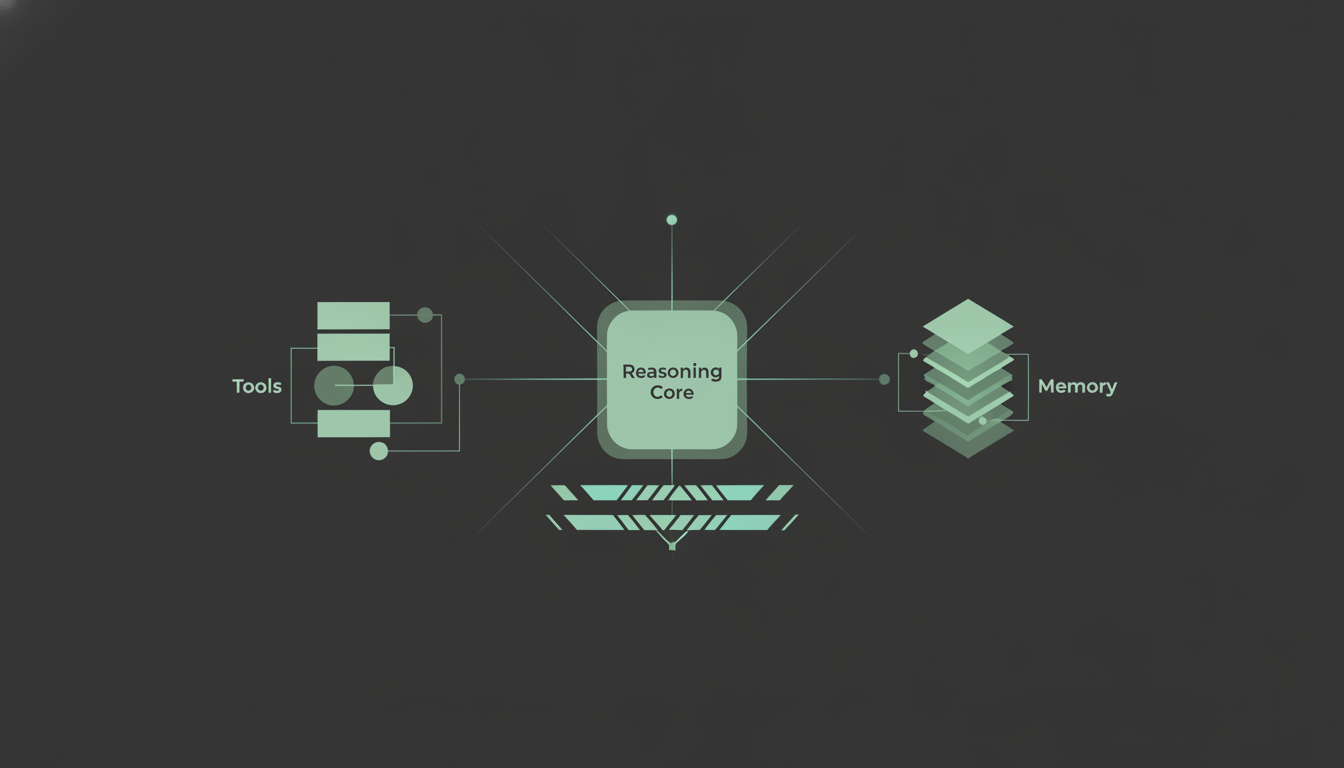
When people ask how to build their own AI like ChatGPT, they rarely mean training a language model from scratch — that costs millions in compute and there is no reason to do it. What you actually build is an application on top of an existing model, the same way ChatGPT itself is an application on top of GPT. The model supplies the intelligence; you supply everything that makes it useful for your specific job.
That layer is smaller than most people expect. Here are the five steps.
Step 1: Pick a model and get an API key
Choose a foundation model you can call over an API: OpenAI’s GPT models, Anthropic’s Claude, or Google’s Gemini are the mainstream options, and open-weights models like Llama can run on your own hardware if data cannot leave your infrastructure. Start with a hosted API — you can swap models later, and your first version should optimise for iteration speed, not cost.
Step 2: Give it an identity with a system prompt
The system prompt is the standing instruction the model reads before every conversation: who it is, what it does, what it must refuse, and what tone it takes. This is the cheapest, highest-leverage component of the whole build — most of the difference between a generic chatbot and something that feels like your product lives here.
Step 3: Connect tools so it can do things
A model alone can only talk. Give it tools — functions it can call to search your knowledge base, query an API, create a ticket, send a draft — and it becomes an AI agent that acts rather than just answers. Every major model API supports tool calling natively. Start with one or two narrow tools; every tool you add is both a capability and a new way to fail.
Step 4: Add memory and knowledge
Two different problems, two different fixes. Conversation memory keeps context across a session and across sessions — typically a store of past interactions the agent can re-read. Domain knowledge comes from retrieval: index your documents, search them at question time, and hand the relevant passages to the model instead of hoping the model already knows your business.
Step 5: Test it, bound it, and watch it run
Before real users touch it, build a test set of twenty or more real tasks with known-good answers and run it on every change — this is how you catch the prompt tweak that quietly breaks something else. Bound what the agent can do: least-privilege access to tools, spending limits, and clear rules for when it must hand off to a human. Then monitor it in production, because agents drift when models update and usage shifts.
The honest bottom line
A working prototype of your own ChatGPT-style agent is a weekend project. The gap between that prototype and something your organisation can rely on is operational — evaluation, permissions, monitoring, and a path to production. If you want to know where you stand on those, take the agent readiness assessment, and see the wider picture of what agentic AI changes before you scale beyond the first build.
 Matt DoughtyCEO & Co-Founder, Prefactor
Founder of Prefactor, writing on the operational reality of getting AI agents into production — evaluation, observability, governance, and the plumbing assistants never needed.