Four-Stage Agent Rollout: Shadow to Production Gates
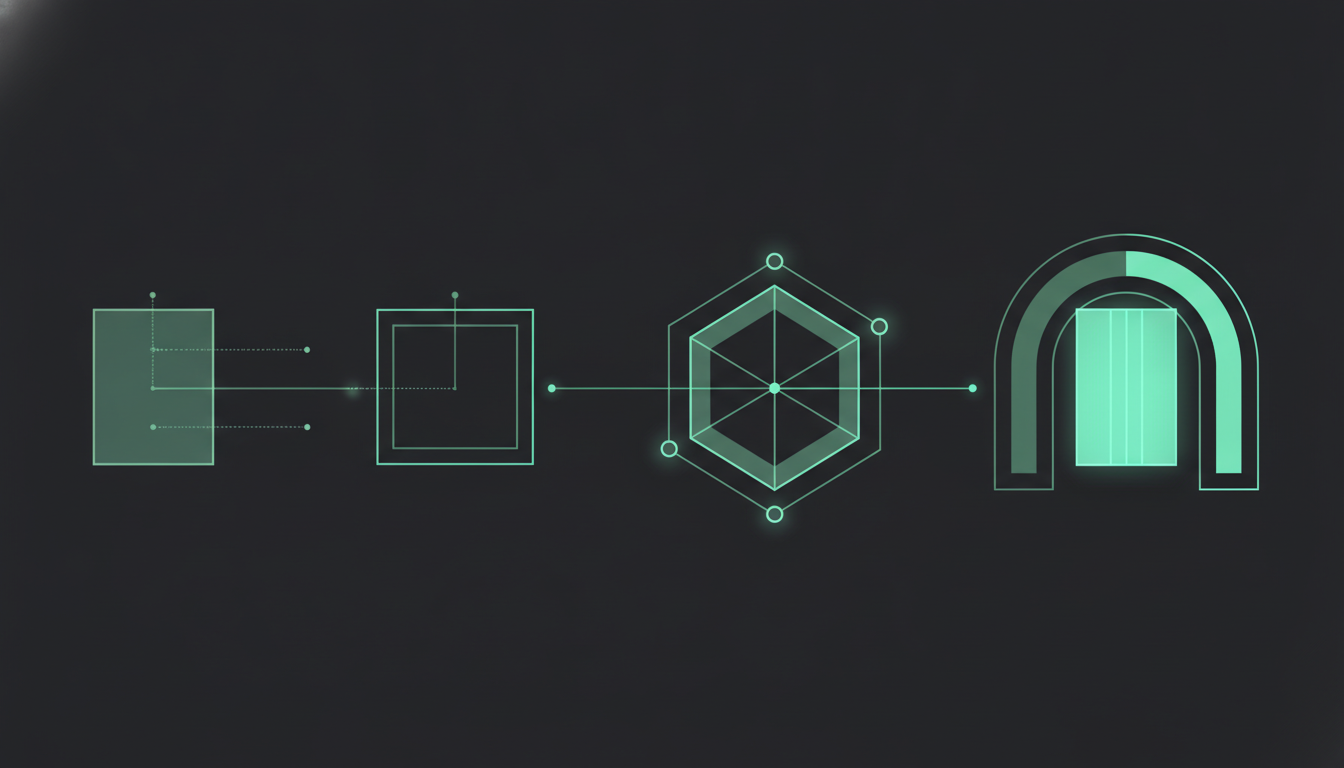
What the four agent rollout stages gates are
The four agent rollout stages gates are shadow, canary, percentage, and full. Each stage answers one specific evaluation question before traffic advances, and each has a defined hold time, a go/no-go condition, and a rollback trigger. Without that structure, you are running a production experiment with no exit criteria.
A half of enterprises surveyed have deployed an agent that passed internal evals and still caused a customer-facing failure, and in one in four of those cases it happened more than once, according to a June 2026 VentureBeat Pulse survey of 157 enterprises. The failure mode is consistent: teams test capability but skip the rollout infrastructure that would have caught the production mismatch early.
Why stage gates exist
Each stage is not a checkpoint that asks “is it working?” It asks a narrower question that the previous stage could not answer.
Shadow asks: does the agent produce correct outputs at real-traffic volume and latency? Canary asks: do real users experience the outputs without harm? Percentage asks: does quality hold as load increases and edge cases accumulate? Full asks: is automatic rollback armed and calibrated?
That sequence matters because evaluation at development time measures a different distribution than production traffic. Shadow is the bridge between the two.
flowchart TD
    A[Shadow\n100% traffic, offline scoring] --> B{Pass shadow criteria?}
    B -- No --> Z[Hold / fix]
    B -- Yes --> C[Canary\n1-5% live users]
    C --> D{Pass canary criteria?}
    D -- No --> Z
    D -- Yes --> E[Percentage\n10% → 25% → 50%]
    E --> F{Statistical sign-off at each step?}
    F -- No --> Z
    F -- Yes --> G[Full production\nauto-rollback armed]
Stage 1: Shadow
In shadow mode, the agent receives every request alongside the existing system but its outputs are logged, not served. You score those outputs offline against your ground-truth rubric before any user sees a result.
The eval question here is accuracy under real conditions. Define minimum acceptable scores before you start, not after you see the results. If your rubric does not exist in writing before shadow begins, shadow is not a gate, it is observation.
Hold time: run shadow long enough to cover your traffic peaks and your known edge-case patterns. For most customer-facing workflows that means at least forty-eight hours of representative traffic, not forty-eight hours of quiet overnight volume.
Stage 2: Canary
Canary exposes one to five percent of live users to agent outputs. The eval question shifts from accuracy to harm: do real users experience failures that your offline rubric did not anticipate?
Rollback trigger at this stage is a flag flip, not a code revert. This is where feature flags decouple release from deploy. If you wire canary traffic through the same flag that controls percentage and full, a single change pulls back every stage simultaneously.
Deutsche Bank’s deployment of its risk assessment agent within the Corporate Bank compliance framework followed this logic. A three-agent workflow reduced third-party review cycles from roughly three hours to roughly thirty minutes, with a human retaining final sign-off at each stage. That human-in-the-loop gate is itself a canary control: it bounds the blast radius while the agent accumulates a live track record.
Success criteria at canary: task-failure rate below your shadow baseline, escalation rate within a defined band, and p95 latency at or below your pre-agent benchmark. All three must hold for the full hold window before you advance.
Stage 3: Percentage
Percentage rollout steps through discrete traffic levels, commonly ten, twenty-five, and fifty percent, each requiring statistical confirmation before the next step. The eval question here is stability under load and distributional shift.
flowchart LR
    C1[10%] -- hold + sign-off --> C2[25%]
    C2 -- hold + sign-off --> C3[50%]
    C3 -- hold + sign-off --> C4[Full]
    C1 -- breach threshold --> R[Rollback]
    C2 -- breach threshold --> R
    C3 -- breach threshold --> R
Delivery Hero’s Herogen autonomous software-delivery agent reached nine percent of all code change requests at eighteen percent rollout completion, equivalent to the output of one hundred and thirty engineers, by April 2026. That figure only became meaningful because guardrail validation at each capability expansion phase gave the team a live quality baseline to compare against. Without those percentage gates, the nine-percent share would have been a risk figure, not a proof point.
At each percentage step, re-run your agent evaluation suite against the live slice, not just the shadow corpus. Production traffic will surface failure modes that shadow missed.
Stage 4: Full production
Full production does not mean oversight ends. It means your rollback is automatic rather than manual. The eval question is: are your rollback triggers calibrated tightly enough to catch regression before it spreads, but loosely enough that normal variance does not cause false rollbacks?
BILL’s deployment of the DevRev Computer platform moved from a seventeen percent automatic resolution rate to seventy percent across eight million users and five hundred thousand customers in fifteen weeks. That scale is achievable because human-in-the-loop escalation remained active throughout. Full production did not remove the safety surface; it formalized it.
Arm rollback on three signal types: task-failure rate, latency at p95, and escalation rate. Set thresholds against your canary baseline, not against an industry benchmark. Your traffic profile is specific to your users.
AI agent governance at this stage means logging who approved each gate transition, what the success criteria were, and what the live metrics showed at the moment of sign-off. That record is your audit trail if something fails later.
Operationalizing the gates
Gates only work if the infrastructure behind them is wired correctly before rollout begins.
Feature flags control traffic split at every stage. Your agent observability stack must emit the specific metrics each gate checks, not generic uptime signals. A monitoring dashboard that tracks drift instead of latency will not catch a canary breach in time. DigitalApplied’s analysis of 2026 production incidents found that most failures were deploy incidents, not capability incidents, and that teams adopting gated rollout reduced production incidents by more than sixty percent.
Governance checkpoints sit on top of the technical gates. Each go decision requires a named approver, a written record of the criteria met, and a rollback plan in a runnable state. Tools like Prefactor provide a governance layer that ties flag-flip approvals to evaluation records, so the audit trail is automatic rather than a manual document.
For multi-agent systems, run each agent through its own gate sequence before you gate the system as a whole. A composed system that passes integration testing can still carry a component that never cleared its own canary.
Only twenty-five percent of organizations have moved forty percent or more of their AI pilots into production, and just twenty-one percent report mature agentic AI governance, according to Deloitte’s 2026 survey of 3,235 leaders. The bottleneck is rarely capability. It is the absence of rollout infrastructure that lets teams make a go decision with confidence.
Treat your rollout pipeline the way you treat your AI governance framework: define it before you need it, not after the first incident.
Where to start
Audit whether your current agent deployment has a shadow stage, defined go/no-go criteria, and a flag-based rollback before you advance to canary. If any of those are missing, you are running production at full blast radius. Take the agent readiness assessment to identify which parts of your rollout infrastructure need work before your next deployment.
 Matt DoughtyCEO & Co-Founder, Prefactor
Founder of Prefactor, writing on the operational reality of getting AI agents into production — evaluation, observability, governance, and the plumbing assistants never needed.